Missouri115 counties plus the City of St. Louis
Sell Land in Missouri for Cash
Missouri fields and wooded Ozarks tracts need different price comparisons. Use the data here and compare offers from land buyers in our network who buy Missouri land.
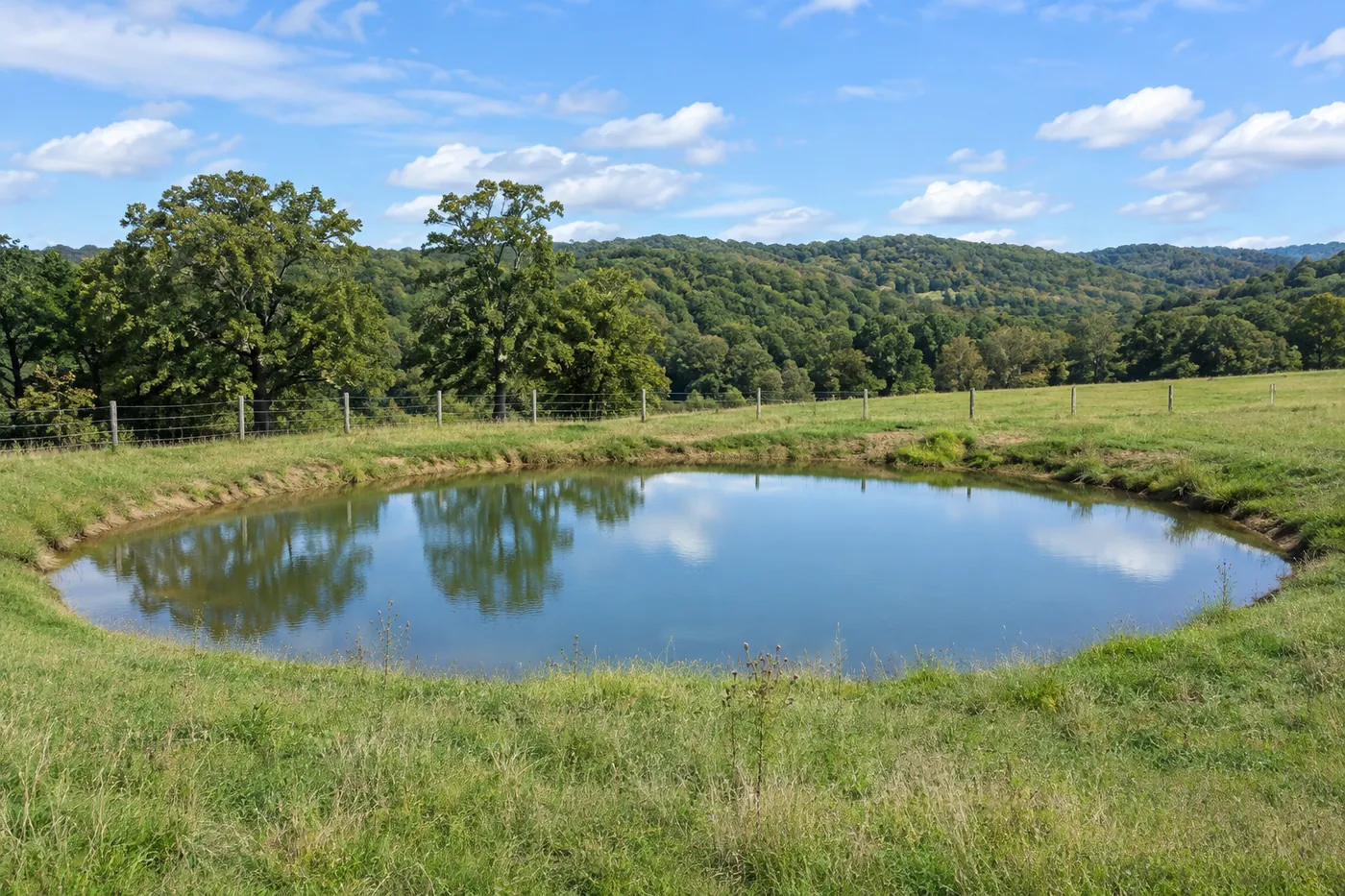
$5,200/ acre
Average farm real estate value, 2026
+4.0% vs 2025
Farm real estate
$5,200/acre
US average $4,500
Cropland
$5,310/acre
US average $6,020
Pasture
$2,850/acre
US average $2,000
1-year change
+4.0%
farm real estate, 2025 to 2026
Source: USDA NASS, Land Values 2026 Summary (2026 averages, released July 31, 2026); Census Bureau county list.
What land is worth in Missouri
Missouri's USDA farm real estate and pasture averages exceed the national averages, while cropland falls below its national comparison. A tract's own use and location still drive its price.
- Use Missouri's agricultural categories to frame a parcel-specific value discussion.
- Distinguish workable fields from wooded slopes and acreage without adequate access.
- An annual statewide increase does not set your tract's asking price.
Read more
Productive fields and wooded Ozarks acreage should not receive the same assumptions. USDA's Missouri averages for 2026 were $5,200 per acre for farm real estate, $5,310 for cropland and $2,850 for pasture. The US comparisons were $4,500, $6,020 and $2,000, respectively. These figures describe different agricultural measures, rather than a range that every Missouri parcel must fall within. Match your property's use to the right category before making an adjustment for location or physical limitations.
Missouri's farm real estate average rose 4.0% from 2025 to 2026, versus a national change of 3.4%. Its cropland average rose 3.1%, compared with 3.3% nationally. The pasture average increased 3.6%, against the US increase of 4.2%. None of those movements describes a specific sale. A tract's condition and buyer use can matter more than the direction of a statewide series.
Access can divide otherwise similar Missouri tracts into different price discussions. Buyers also weigh water, electric service, timber condition, field shape and usable acres. On Ozarks ground, slopes and the route from the public road can change what a buyer can do. In agricultural areas, actual productive use deserves its own description. Assemble the evidence behind your number so you can judge the assumptions inside an offer.
Missouri vs. US average, dollars per acre (2026)
Farm real estate
Cropland
Pasture
Missouri farm real estate, average per acre
How a land sale works in Missouri
Title companies customarily handle Missouri closings, and the state has no deed transfer tax. Recording fees and other closing expenses remain separate costs in the transaction.
Read more
The table below outlines the process, including county recording and the distinction between statewide price disclosure and local certificates of value. A customary Missouri closing runs through a title company, which coordinates the transfer under the purchase agreement. The closing provider needs the ownership records and information about mortgages, liens or other interests affecting the tract. Set out who pays title and closing costs in writing. The absence of a deed transfer tax is useful for budgeting, but it does not establish the total amount deducted from your proceeds.
The deed is recorded with the recorder in the county where the real estate lies. Missouri does not impose a uniform statewide sale-price disclosure requirement. However, St. Louis City, St. Louis County, Jackson County and St. Charles County require certificates of value by local ordinance. A public-record search can therefore produce different kinds of price evidence depending on the property's location. Review the underlying record before using a figure as a comparable sale.
A specific Missouri disclosure duty applies when a seller knows that a parcel was used for methamphetamine production. That use must be disclosed to the buyer in writing even if nobody was convicted for the production. This rule should not be confused with a universal vacant-land condition form. Identify the required transaction disclosures with the closing provider, and describe known property conditions consistently when comparing proposals from different buyers.
At a glance
- No deed transfer tax does not remove title and recording charges.
- The county recorder receives the deed for the property's location.
- Local certificates of value qualify Missouri's statewide price-disclosure picture.
| Who handles closing | Title company. Old Republic Title identifies the title company as Missouri's customary closing entity. source |
|---|---|
| Transfer tax | No state transfer tax. Not applicable; recording and closing charges are separate. source |
| Where the deed is recorded | Deeds are recorded with the recorder of the county where the real estate is situated. source |
| Are sale prices public? | Missouri lacks a uniform statewide sale-price disclosure requirement, although St. Louis City, St. Louis County, Jackson County and St. sourceMoreCharles County require certificates of value by local ordinance. |
Back taxes, tax sales and farm valuation in Missouri
Missouri tax-sale redemption depends on the offering and procedure, while agricultural assessment depends on actual use. Capital gains receive separate treatment for eligible individuals.
Read more
Establish these issues independently so a tax-sale deadline or assessment assumption does not distort your expected sale proceeds. Ordinary first- and second-offering Chapter 140 tax sales provide an absolute redemption right during the following year for eligible parties. A defeasible right continues afterward until the purchaser acquires the deed, subject to statutory payments. Third-offering sales instead have a ninety-day redemption period. Post-third-offering sales generally have none, although a purchaser can elect the specified procedure before the deed issues. These distinctions make the actual sale records essential.
Missouri assesses actively farmed agricultural land using productive value. Vacant or unused land is classified by its immediate most suitable economic use, and unused land classified agricultural is assessed at market value. A change from farming to holding unused ground can therefore affect the assessment. Do not assume the seller's current bill predicts the buyer's future bill. Confirm classification and actual use rather than assigning an unsupported statewide sale-triggered rollback period.
For tax years beginning on or after January 1, 2025, eligible individual taxpayers subtract 100% of federally reported capital gains in Missouri. Corporate eligibility follows a separate statutory trigger, and federal taxes remain a different calculation. The sale price alone does not show whether your transaction qualifies or determine all tax consequences. Check the applicable redemption process, assessment classification and gain treatment with a real estate attorney or tax professional before acting.
At a glance
- Ordinary initial tax-sale offerings have different rights from later offerings.
- Unused agricultural-classified land can be assessed on market value instead.
- Eligible individuals can subtract federally reported capital gains under Missouri law.
| Unpaid property taxes | For ordinary first- and second-offering Chapter 140 tax sales, an owner, lienholder, occupant or other interested person has an absolute right to redeem during the following year and a defeasible right afterward until the purchaser acquires the deed, subject to the statutory payments. source |
|---|---|
| Farm, timber or open-space valuation | Agricultural and horticultural productive-use valuation: Actively farmed agricultural land is assessed using productive value. sourceMoreVacant or unused land is classified by its immediate most suitable economic use; unused land classified agricultural is assessed on market value. When land becomes vacant, unused or held for future use, the assessor determines its classification from the statutory economic-use factors rather than automatically continuing productive-use valuation. |
| State tax on the gain | For tax years beginning on or after January 1, 2025, eligible individual taxpayers subtract 100% of federally reported capital gains; corporate eligibility follows a separate statutory trigger. source |
What buyers check on Missouri land
Adequate road access is a central Missouri land check, especially for acreage reached across someone else's property. Buyers also need an accurate account of land use and known contamination history.
Read more
A route used informally is different from a documented right to reach the tract. Missouri provides a court process for an owner lacking adequate public-road access to seek a private road or widening based on strict necessity. The owners of the land crossed must be named as defendants. That option is not the same as having an established easement ready to convey. If access is unresolved, say so in the property description and collect existing deeds, surveys and agreements that explain the current route.
A buyer needs to distinguish a productive farm from unused agricultural-classified land and a recreational tract from a documented homesite. Water availability, utility distance, drainage and soil conditions help define those uses. Timber and mineral rights should be described according to the records you hold, including any separate agreements. An accurate description lets a buyer assess the tract without assuming that every wooded acre has equal harvest value or building potential.
Clear ownership information supports the physical description. If relatives share interests or an estate is involved, explain who owns the land and what documents are available. Add known leases, recorded restrictions and the written disclosure required for known methamphetamine production. You can compare cash terms without accepting an offer. Once you select a buyer, review the actual interest being conveyed and the unresolved conditions before relying on a proposed closing date.
At a glance
- A private-road court petition requires strict necessity and the affected landowners' involvement.
- Known methamphetamine production requires written disclosure to a Missouri buyer.
- Show field use, timber, water and existing rights as separate property details.
- A seller who knows a parcel was used for methamphetamine production must disclose that use to the buyer in writing, regardless of whether anyone was convicted for the production. source
- An owner lacking adequate public-road access may petition the circuit court for a private road or widening based on strict necessity; owners of the land crossed must be named as defendants. source
- Chapter 140 third-offering tax sales have a ninety-day redemption period; post-third-offering sales generally have none, although the purchaser may elect the specified redemption procedure before the deed issues. source
Calculator
Estimate your Missouri land from USDA averages
Build a Missouri benchmark from the land's actual use, then test how access, power and usable acreage change the estimate before reviewing buyer terms.
Open the full calculatorLand type
Public-data benchmark
-
-
Built from USDA's 2026 state averages for pasture. It is a starting point, not an appraisal or an offer.
See what buyers offerAll 115 counties plus the City of St. Louis in Missouri
Buyers in our network review land in every one of them. Pick yours on the form.
- Adair County
- Andrew County
- Atchison County
- Audrain County
- Barry County
- Barton County
- Bates County
- Benton County
- Bollinger County
- Boone County
- Buchanan County
- Butler County
- Caldwell County
- Callaway County
- Camden County
- Cape Girardeau County
- Carroll County
- Carter County
- Cass County
- Cedar County
- Chariton County
- Christian County
- Clark County
- Clay County
- Clinton County
- Cole County
- Cooper County
- Crawford County
- Dade County
- Dallas County
- Daviess County
- DeKalb County
- Dent County
- Douglas County
- Dunklin County
- Franklin County
- Gasconade County
- Gentry County
- Greene County
- Grundy County
- Harrison County
- Henry County
- Hickory County
- Holt County
- Howard County
- Howell County
- Iron County
- Jackson County
- Jasper County
- Jefferson County
- Johnson County
- Knox County
- Laclede County
- Lafayette County
- Lawrence County
- Lewis County
- Lincoln County
- Linn County
- Livingston County
- Macon County
- Madison County
- Maries County
- Marion County
- McDonald County
- Mercer County
- Miller County
- Mississippi County
- Moniteau County
- Monroe County
- Montgomery County
- Morgan County
- New Madrid County
- Newton County
- Nodaway County
- Oregon County
- Osage County
- Ozark County
- Pemiscot County
- Perry County
- Pettis County
- Phelps County
- Pike County
- Platte County
- Polk County
- Pulaski County
- Putnam County
- Ralls County
- Randolph County
- Ray County
- Reynolds County
- Ripley County
- Saline County
- Schuyler County
- Scotland County
- Scott County
- Shannon County
- Shelby County
- St. Charles County
- St. Clair County
- St. Francois County
- St. Louis County
- St. Louis city
- Ste. Genevieve County
- Stoddard County
- Stone County
- Sullivan County
- Taney County
- Texas County
- Vernon County
- Warren County
- Washington County
- Wayne County
- Webster County
- Worth County
- Wright County
Selling land in Missouri: common questions
Still unsure? Send us a question and we will answer it in plain words.
What is Missouri farmland worth per acre?
Missouri's USDA farm real estate benchmark was an average of $5,200 per acre in 2026. Cropland averaged $5,310 and pasture averaged $2,850. Those statewide averages give agricultural context; productive use, water, access, utilities and location are needed to judge an individual farm or mixed tract.
Does Missouri charge a deed transfer tax?
Missouri has no deed transfer tax. Title work, recording and other closing costs are separate expenses, so the absence of that tax does not describe your total deductions. Compare the cost allocation in the purchase agreement and the itemized closing statement when evaluating net proceeds.
Are land sale prices public in Missouri?
Missouri has no uniform statewide sale-price disclosure requirement. Local certificate-of-value requirements apply in St. Louis City, St. Louis County, Jackson County and St. Charles County. Check which record you are reading before treating a public value figure as the exact price of a comparable land sale.
How long do I have to redeem Missouri land after a tax sale?
The period depends on the offering and procedure. Ordinary first- and second-offering Chapter 140 sales give eligible parties an absolute right during the following year, with a defeasible right afterward until the deed. Third-offering sales have ninety days, while post-third-offering sales generally have no redemption period.
Can I sell landlocked acreage in the Missouri Ozarks?
You can request offers with the access limitation clearly described. Missouri allows a court petition for a private road or widening based on strict necessity when adequate public-road access is lacking. That process does not establish an existing access right, so buyers need the current records and facts.
Will Missouri tax my capital gain when I sell land?
Eligible individual taxpayers can subtract 100% of federally reported capital gains for Missouri tax years beginning on or after January 1, 2025. Corporate treatment uses a separate eligibility trigger. Federal tax and other transaction costs are separate from that state subtraction and still affect the sale's financial result.
Nearby
Other states
Guides
Read before you sell
Get cash offers for your Missouri land
Tell us the county and the acreage. Land buyers in our network who buy there will contact you with offers.