Texas254 counties
Sell Land in Texas for Cash
Texas acreage needs a price grounded in access, usable land and mineral rights. Compare offers from land buyers in our network who buy in Texas.
$3,100/ acre
Average farm real estate value, 2026
+4.4% vs 2025
Farm real estate
$3,100/acre
US average $4,500
Cropland
$2,790/acre
US average $6,020
Pasture
$2,420/acre
US average $2,000
1-year change
+4.4%
farm real estate, 2025 to 2026
Source: USDA NASS, Land Values 2026 Summary (2026 averages, released July 31, 2026); Census Bureau county list.
What land is worth in Texas
Texas land values depend on the parcel, not just its acreage. USDA's 2026 averages put Texas farm real estate and cropland below their national counterparts, while pasture was above the US average.
- Match the USDA category to your land before comparing per-acre figures.
- Separate usable pasture or cropland from acreage with access or terrain limits.
- Document water, power and mineral ownership before weighing a buyer's price.
Read more
Those categories help frame a price discussion without setting your property's value. USDA's 2026 Texas farm real estate average was $3,100 an acre. The national figure was $4,500. Texas cropland averaged $2,790 against $6,020 nationally. For pasture, the Texas figure was $2,420, above the national $2,000 average. Farm real estate includes farm land and buildings. An unimproved tract should not be treated as though it includes the same improvements as that broader category.
The Texas USDA averages rose from 2025 to 2026: farm real estate increased 4.4%, cropland 3.0% and pasture 5.2%. These are changes in statewide averages, not measured appreciation for your particular ranch or lot. A tract with documented road access and usable water presents a different purchase decision from acreage with unresolved access. The same statewide increase cannot resolve that difference for a buyer.
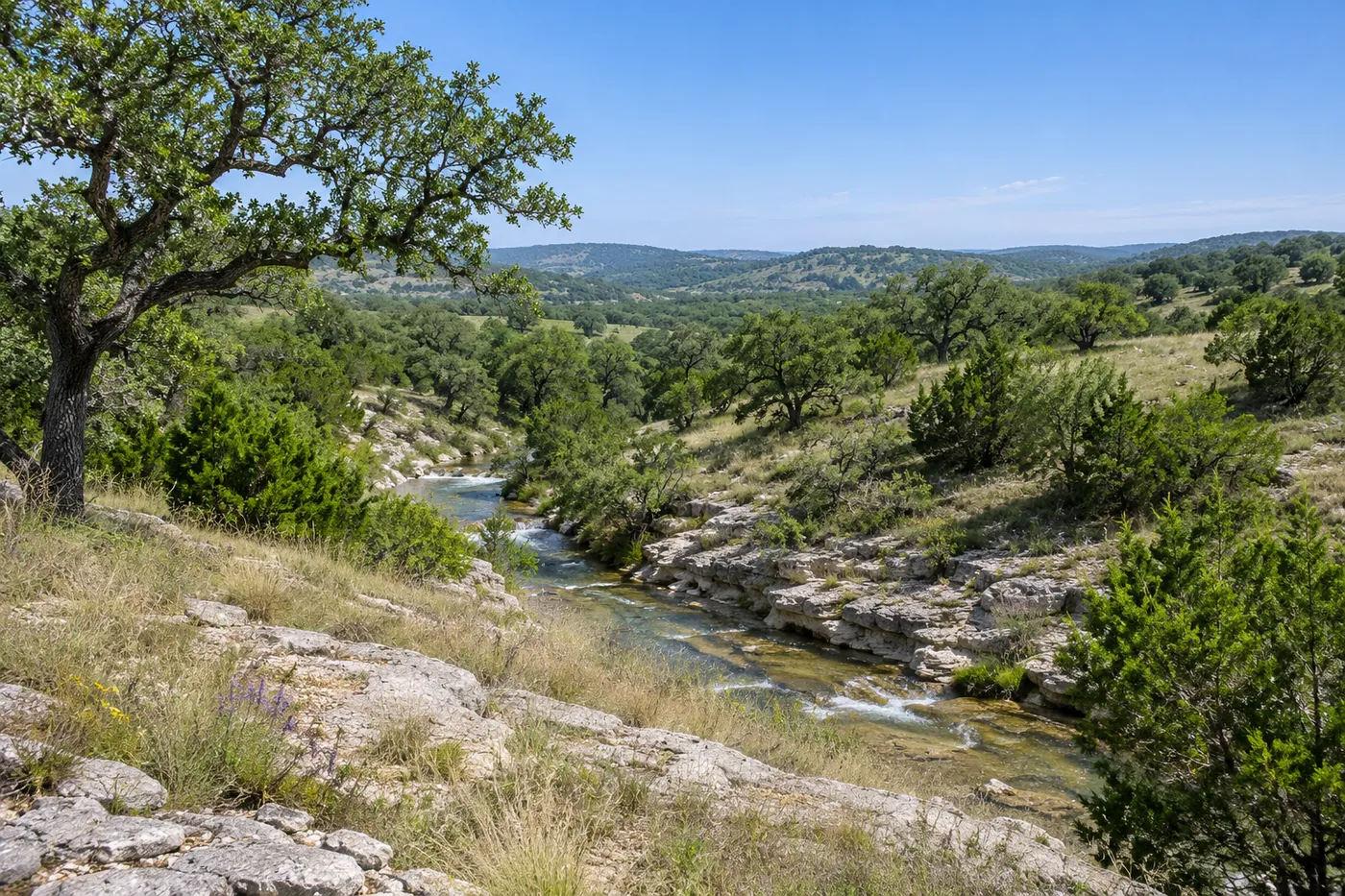
Your parcel's location and usable acres belong beside the USDA figure. Hill Country land, working pasture and a wooded tract do not serve identical uses. Power availability, timber condition and the cost of reaching a building site also affect the buyer's math. Describe existing features separately from improvements someone would have to install. Actual offers or a parcel appraisal provide a more specific number than multiplying acreage by a state average.
Texas vs. US average, dollars per acre (2026)
Farm real estate
Cropland
Pasture
Texas farm real estate, average per acre
How a land sale works in Texas
A title company can handle your Texas closing, or an attorney can close the sale. The title review, signed agreement and ownership documents determine the work required.
Read more
Texas has no real estate transfer tax on a fee simple conveyance, but recording and other closing charges remain separate. The contract establishes what you are selling and which costs each party accepts. For Texas acreage, that includes a clear description of any mineral reservation rather than an assumption that surface ownership answers the question. A title company or closing attorney handles the closing, checks the ownership record and identifies matters that need attention. Your closing timing depends on that title work and the buyer's readiness to complete the purchase.
Texas prohibits the real estate transfer tax described in the table below. That does not make every closing expense disappear. Recording fees are a separate item, and the agreement should explain the allocation of other charges. The county clerk records real property instruments. Texas also does not require public reporting of sale prices, so a recorded deed alone will not necessarily tell you what another seller received for nearby acreage.
Texas's residential property-condition disclosure requirement does not apply to unimproved land. That exemption does not settle every notice a particular transaction needs. Keep known access problems, existing agreements and ownership questions in the discussion instead of treating the form exemption as a reason to omit them. For title, mineral or tax questions before signing, seek a parcel review from a title company, real estate attorney or tax professional.
At a glance
- The county clerk records the deed for the county containing your land.
- Texas does not require public sale-price reporting, limiting direct price comparisons.
- Unimproved land falls outside the residential property-condition form requirement described below.
| Who handles closing | Either. Title insurance companies and agents handle closings, and attorneys may also close transactions. sourceMoreThe Texas title insurance manual expressly recognizes closing services performed with or without an attorney. |
|---|---|
| Transfer tax | No state transfer tax. No real estate transfer tax to allocate. source |
| Where the deed is recorded | The county clerk records deeds and other recordable real property instruments. source |
| Seller disclosure | The Section 5.008 residential property-condition disclosure does not apply to unimproved land; the statute also excludes transfers where any dwelling is worth no more than five percent of the property value. sourceMoreSeparate transaction-specific statutory notices may still apply. |
| Are sale prices public? | Texas does not require public reporting of sale prices, although that does not prohibit disclosure or confidential reporting through an MLS. source |
Back taxes, tax sales and farm valuation in Texas
Unpaid Texas property taxes can lead to a foreclosure sale, and agricultural appraisal can affect the cost of changing land use. A voluntary sale needs a clear account of both.
Read more
Texas has no individual state income tax on a land-sale gain; entity taxes are separate. The Texas redemption period depends on the property's status when the foreclosure suit or warrant application was filed. For land that was neither a residence homestead nor designated for agricultural use, redemption is available within 180 days after the tax deed is recorded. Agricultural land and mineral interests instead have a two-year period. The table below distinguishes these categories; do not assign the shorter deadline to every vacant tract.
Agricultural, timberland and wildlife-management special appraisal can reduce the taxable valuation of qualifying land by using productivity rather than market value. For agricultural land under this appraisal, a change to nonagricultural use generally brings rollback tax for the preceding three years that received the lower valuation. The amount reflects the difference between taxes on agricultural and market values, with statutory exceptions. A sale and a use change are not interchangeable events.
Your expected proceeds should account for recorded tax claims and any identified rollback exposure rather than just the gross offer. Keep the appraisal status, current use and proposed use visible during negotiations. Texas's lack of an individual state income tax removes that state income-tax item from an individual's gain, but it does not erase property taxes or establish the total tax result of a sale. Entity ownership needs its own review.
At a glance
- Texas tax sales convey a redeemable deed rather than a tax certificate.
- Agricultural and mineral interests have different redemption rules from ordinary nonhomestead land.
- A qualifying appraisal values productive use rather than the property's market price.
| Unpaid property taxes | A tax-lien foreclosure judgment can lead to a public tax sale under Chapter 34; this is a deed sale subject to statutory redemption, rather than a tax-certificate auction. sourceMoreFor land that was neither a residence homestead nor designated for agricultural use when the suit or warrant application was filed, the owner may redeem within 180 days after the purchaser's or taxing unit's deed is recorded. Agricultural land and mineral interests instead have a two-year redemption period under Section 34.21. |
|---|---|
| Farm, timber or open-space valuation | Agricultural, Timberland and Wildlife Management Use Special Appraisal: Qualifying agricultural, timber and wildlife-management land can receive special appraisal based on productivity rather than market value. sourceMoreFor agricultural land receiving this appraisal, a change to nonagricultural use generally triggers rollback tax for the preceding three years that received the lower appraisal. The rollback is the difference between taxes on agricultural value and taxes on market value; statutory exceptions apply. |
| State tax on the gain | Texas prohibits an individual net income tax, so it does not impose an individual state income tax on a land-sale gain; entity taxes are separate. source |
What buyers check on Texas land
Texas buyers need to know which surface and mineral rights and practical uses come with the acres. Mineral ownership and sewage approval can change that answer.
Read more
A road, a fence or a large tract on a map does not establish mineral title, legal access or a permitted homesite. Mineral rights need an explicit place in the sale discussion. Texas allows the surface and mineral estates to be owned separately. Unless the conveyance reserves minerals or limits the transfer to the surface, the seller's mineral estate is included. That means you need to distinguish minerals you own from rights reserved by an earlier owner. The buyer's understanding and the deed language should address the same property interest.
A rural building plan also depends on sewage approval. Texas generally requires permits for onsite sewage facilities, and local programs can impose stricter requirements than state minimums. The ten-acre permit exemption carries additional conditions, including a site evaluation and a single-family dwelling. A buyer cannot establish exemption from tract size alone. Existing evaluations and permits give a clearer starting point than a general description that the land is suitable for building.
A useful property description separates documented features from unanswered questions. Identify the route onto the tract, available power, existing water facilities and the portion that can support the intended use. For timber or inherited acreage, include relevant timber agreements and the names shown on ownership records. These details help a buyer price the actual purchase and help you compare offers that cover the same acreage and rights rather than different assumptions.
At a glance
- Surface ownership and mineral ownership can belong to different people in Texas.
- Acreage alone does not establish an exemption from septic permitting requirements.
- Share existing surveys, access documents and water information with prospective buyers.
- Texas surface and mineral estates may be owned separately. source
More
Unless the conveyance expressly reserves minerals or limits the sale to the surface, the seller's mineral estate is included in the transfer.
- Texas generally requires permits for on-site sewage facilities, and local programs may be stricter than state minimums. source
More
The ten-acre permit exemption has additional conditions, including a site evaluation and a single-family dwelling, so acreage alone does not establish exemption.
Calculator
Estimate your Texas land from USDA averages
Use the calculator to place Texas USDA averages beside your acreage and access details. Then compare that benchmark with offers for your actual property and rights.
Open the full calculatorLand type
Public-data benchmark
-
-
Built from USDA's 2026 state averages for pasture. It is a starting point, not an appraisal or an offer.
See what buyers offerAll 254 counties in Texas
Buyers in our network review land in every one of them. Pick yours on the form.
- Anderson County
- Andrews County
- Angelina County
- Aransas County
- Archer County
- Armstrong County
- Atascosa County
- Austin County
- Bailey County
- Bandera County
- Bastrop County
- Baylor County
- Bee County
- Bell County
- Bexar County
- Blanco County
- Borden County
- Bosque County
- Bowie County
- Brazoria County
- Brazos County
- Brewster County
- Briscoe County
- Brooks County
- Brown County
- Burleson County
- Burnet County
- Caldwell County
- Calhoun County
- Callahan County
- Cameron County
- Camp County
- Carson County
- Cass County
- Castro County
- Chambers County
- Cherokee County
- Childress County
- Clay County
- Cochran County
- Coke County
- Coleman County
- Collin County
- Collingsworth County
- Colorado County
- Comal County
- Comanche County
- Concho County
- Cooke County
- Coryell County
- Cottle County
- Crane County
- Crockett County
- Crosby County
- Culberson County
- Dallam County
- Dallas County
- Dawson County
- DeWitt County
- Deaf Smith County
- Delta County
- Denton County
- Dickens County
- Dimmit County
- Donley County
- Duval County
- Eastland County
- Ector County
- Edwards County
- El Paso County
- Ellis County
- Erath County
- Falls County
- Fannin County
- Fayette County
- Fisher County
- Floyd County
- Foard County
- Fort Bend County
- Franklin County
- Freestone County
- Frio County
- Gaines County
- Galveston County
- Garza County
- Gillespie County
- Glasscock County
- Goliad County
- Gonzales County
- Gray County
- Grayson County
- Gregg County
- Grimes County
- Guadalupe County
- Hale County
- Hall County
- Hamilton County
- Hansford County
- Hardeman County
- Hardin County
- Harris County
- Harrison County
- Hartley County
- Haskell County
- Hays County
- Hemphill County
- Henderson County
- Hidalgo County
- Hill County
- Hockley County
- Hood County
- Hopkins County
- Houston County
- Howard County
- Hudspeth County
- Hunt County
- Hutchinson County
- Irion County
- Jack County
- Jackson County
- Jasper County
- Jeff Davis County
- Jefferson County
- Jim Hogg County
- Jim Wells County
- Johnson County
- Jones County
- Karnes County
- Kaufman County
- Kendall County
- Kenedy County
- Kent County
- Kerr County
- Kimble County
- King County
- Kinney County
- Kleberg County
- Knox County
- La Salle County
- Lamar County
- Lamb County
- Lampasas County
- Lavaca County
- Lee County
- Leon County
- Liberty County
- Limestone County
- Lipscomb County
- Live Oak County
- Llano County
- Loving County
- Lubbock County
- Lynn County
- Madison County
- Marion County
- Martin County
- Mason County
- Matagorda County
- Maverick County
- McCulloch County
- McLennan County
- McMullen County
- Medina County
- Menard County
- Midland County
- Milam County
- Mills County
- Mitchell County
- Montague County
- Montgomery County
- Moore County
- Morris County
- Motley County
- Nacogdoches County
- Navarro County
- Newton County
- Nolan County
- Nueces County
- Ochiltree County
- Oldham County
- Orange County
- Palo Pinto County
- Panola County
- Parker County
- Parmer County
- Pecos County
- Polk County
- Potter County
- Presidio County
- Rains County
- Randall County
- Reagan County
- Real County
- Red River County
- Reeves County
- Refugio County
- Roberts County
- Robertson County
- Rockwall County
- Runnels County
- Rusk County
- Sabine County
- San Augustine County
- San Jacinto County
- San Patricio County
- San Saba County
- Schleicher County
- Scurry County
- Shackelford County
- Shelby County
- Sherman County
- Smith County
- Somervell County
- Starr County
- Stephens County
- Sterling County
- Stonewall County
- Sutton County
- Swisher County
- Tarrant County
- Taylor County
- Terrell County
- Terry County
- Throckmorton County
- Titus County
- Tom Green County
- Travis County
- Trinity County
- Tyler County
- Upshur County
- Upton County
- Uvalde County
- Val Verde County
- Van Zandt County
- Victoria County
- Walker County
- Waller County
- Ward County
- Washington County
- Webb County
- Wharton County
- Wheeler County
- Wichita County
- Wilbarger County
- Willacy County
- Williamson County
- Wilson County
- Winkler County
- Wise County
- Wood County
- Yoakum County
- Young County
- Zapata County
- Zavala County
Selling land in Texas: common questions
Still unsure? Send us a question and we will answer it in plain words.
How much is an acre of Texas pasture worth?
USDA's 2026 Texas pasture average was $2,420 per acre. It is a statewide agricultural benchmark, not an appraisal of your tract. Water, road rights, usable grazing acres and location can move a parcel away from that average. Compare offers using the rights and improvements actually included.
Do I have to sell my minerals with Texas land?
Minerals can be reserved in a Texas conveyance, but the deed must address that reservation. Without an express reservation or surface-only limitation, the seller's mineral estate transfers with the land. You can only convey or reserve rights you own, so earlier mineral reservations matter too.
Does selling Texas agricultural land trigger rollback taxes?
The agricultural rollback described here generally follows a change to nonagricultural use, rather than a sale by itself. It reaches the preceding three years that received the special appraisal, subject to exceptions. Identify the existing appraisal and planned use before treating the offer as your net proceeds.
How long can I redeem Texas land after a tax sale?
For ordinary nonhomestead land without agricultural designation, the period is 180 days after recording of the tax deed. Agricultural land and mineral interests have a two-year redemption period. The property's status at the relevant filing matters, so the deadline is not determined simply by calling it vacant land.
Is a Texas title company allowed to handle my closing?
Yes. Texas recognizes closings handled through title companies as well as attorneys. The closing process still requires title work and the necessary documents. Agree with your buyer on closing arrangements and expense allocation; the absence of a transfer tax does not remove recording charges.
Can I turn down the offers on my Texas acreage?
You can accept an offer or decline every offer. Sending the property details starts a comparison; it does not choose a buyer for you. Read the proposed price together with mineral terms, expenses and title requirements before deciding which agreement fits your plans for the land.
Nearby
Other states
Guides
Read before you sell
Get cash offers for your Texas land
Tell us the county and the acreage. Land buyers in our network who buy there will contact you with offers.